
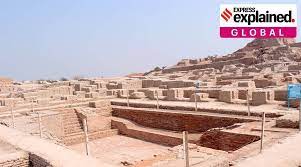
At threat from Pak monsoon,5,000-yr-old heritage of Mohenjo Daro
- The prehistoric antiquity of Mohenjo Daro, which flourished on the right (West) bank of the Indus in the 3rd millennium BC was established by Rakhal Das Banerji of the Archaeological Survey of India in 1922.
- The ruins of the sprawling city of unbaked brick are recognised as a UNESCO World Heritage site in 1980.
Damage at the site
- The ruins "did not remain safe from the devastating effects of downpours". and that the "DK Area, Muneer Area Stupa, Great Bath and other important sites of these ruins have been badly affected by the natural disaster".
- The Paris Stairs, the Stupa and the DK Area are particularly in the worst condition.
Mound of the Dead
- Along with Harappa, Mohenjo Daro is the best known site of the bronze age urban civilization.
- The civilization went into decline in the middle of the second millennium BC for reasons that are believed to include catastrophic Climate change.
- Sites of the Indus Valley Civilization have been found in a large area extending from Sutkagen Dor in Balochistan near the Pakistan-Iran border to Rakhigarhi in Haryana, and from Manda in Jammu to Daimabad in Maharashtra.
- Other important sites in India are at Lothal and Dholavira in Gujarat and Kalibangan in Rajasthan
Features of Mohenjodaro
- Elaborate town planning with street grids with brick pavements,
- Developed water supply,
- Developed Drainage, and covered sewerage systems
- Homes with toilets,
- Monumental buildings such as the Great Granary and the Great Bath.
- At its peak, Mohenjo Daro, literally Mound of the Dead' is estimated to have between 30,000 and 60.000 residents with a highly evolved social organisation