
Demolition drives violate international law:
The bulldozing of houses was to impose collective punishment on the alleged rioters through arbitrary destruction and eviction of houses and are against international laws.
Communal clashes
- Communal clashes broke out during Ram Navami processions in several parts of the country.
- Subsequently, the Madhya Pradesh government bulldozed the houses of those who were allegedly involved in rioting.
- The purpose seems to be to impose collective punishment.
- This idea of serving ‘justice’, quick and cold, through bulldozers emanated in Uttar Pradesh.
- In the wake of protests against the Citizenship (Amendment) Act, 2019.
- The Uttar Pradesh government passed orders to recover damages from those who were allegedly involved in destroying public property.
- This process has been further institutionalised through the enactment of the Uttar Pradesh Recovery of Damages to Public and Private Property Act, 2020.
Right to adequate housing
- The right to housing is not only a fundamental right recognised under Article 21 of the Indian Constitution, it is also a well-documented right under the international human rights law framework, which is binding on India.
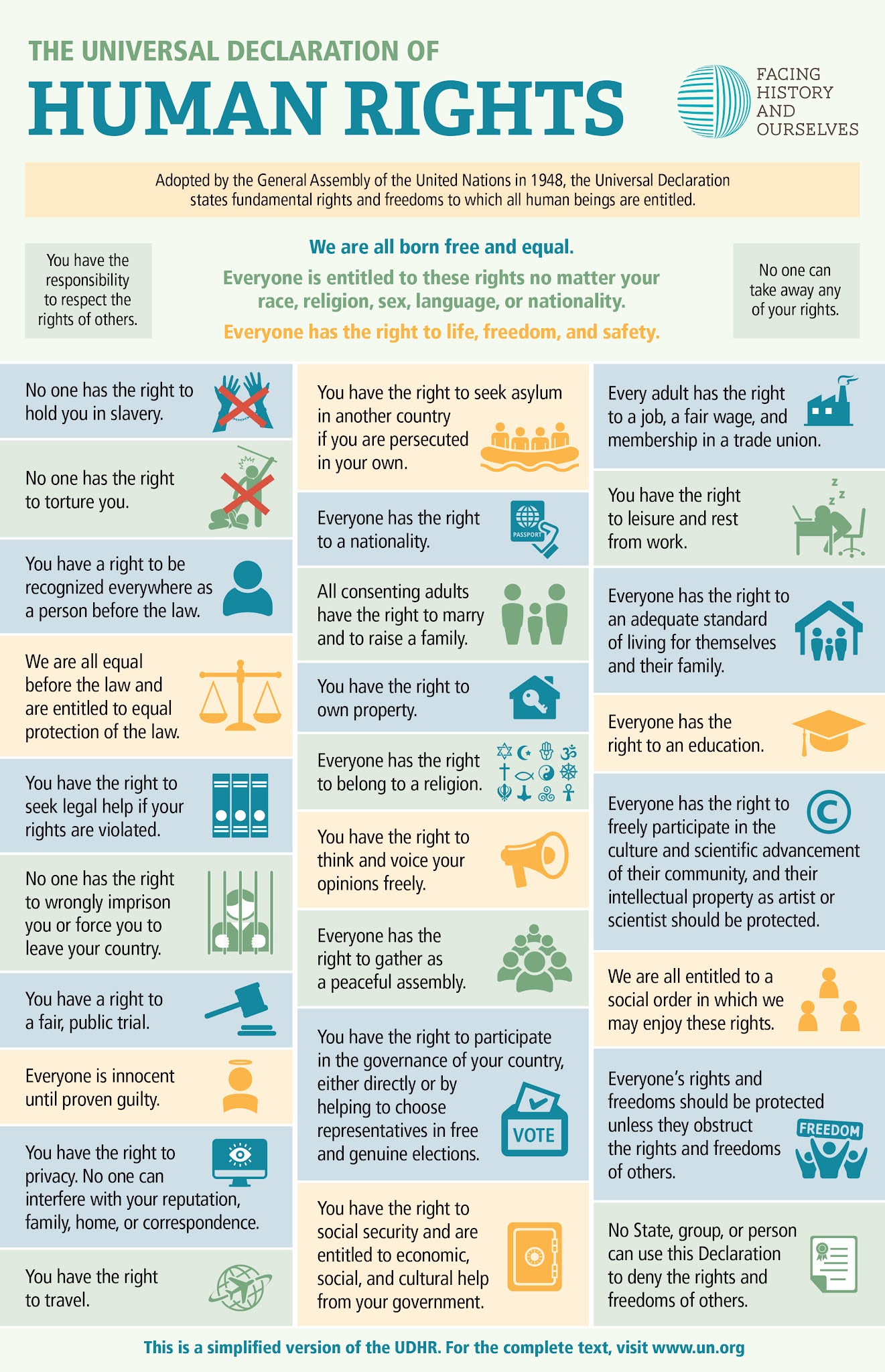
- For instance, Article 25 of the Universal Declaration of Human Rights (UDHR) states that everyone has the right to a standard of living adequate for the health and well-being of himself and of his family.
- Likewise, Article 11.1 of the International Covenant on Economic, Social and Cultural Rights (ICESCR) recognises “the right of everyone to an adequate standard of living for himself and his family, including adequate food, clothing and housing, and to the continuous improvement of living conditions”.
- Under Article 11.1, countries are under an obligation to take “appropriate steps” to ensure the realisation of these rights such as the right to adequate housing.
- The rights recognised under ICESCR, according to Article 4, can be restricted by States only if the limitations are determined by law.
- Any limitation imposed on the right to adequate housing cannot lead to the destruction of these rights. This is categorically recognised in Article 5 of ICESCR.
- Besides, international law also prohibits arbitrary interference in an individual’s right to property. For instance, Article 12 of the UDHR states that “no one shall be subjected to arbitrary interference with his privacy, family, home or correspondence, nor to attacks upon his honour and reputation”.
- Thus, arbitrary interference with an individual’s property is a gross violation of the ICCPR.
Forced evictions
- According to the UN Human Rights Office, an integral element of the right to adequate housing is ‘protection against forced evictions’.
- Building on the right to adequate housing, given in Article 11.1 of ICESCR, the UN Human Rights Office defines ‘forced evictions’ as ‘permanent or temporary removal against the will of individuals, families and/or communities from the homes and/or land which they occupy, without the provision of, and access to, appropriate forms of legal or other protection’.
- The right to adequate housing also entails freedom from arbitrary interference with one’s home, privacy, and family.
Judicial incorporation
- Moreover, the international human rights law identified above has been judicially incorporated by the Supreme Court of India into the Indian legal system.
- The apex court in cases like Bachan Singh vs State of Punjab, Vishaka vs State of Rajasthan, and recently in the famous Puttaswamy vs Union of India has laid down the principle that the fundamental rights guaranteed under the Constitution must be read and interpreted in a manner which would enhance their conformity with international human rights law.
- As the custodian of India’s constitutional order, it is high time that the judiciary acted and imposed necessary checks on the unbridled exercise of power by the executive.
- Courts should use international law to deliver justice in each case.