
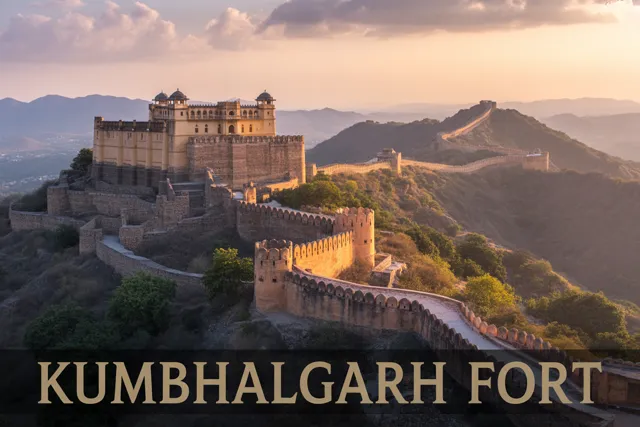
Kumbhalgarh Fort Recognized as Second Longest Wall by UNESCO
| Key Facts | Details |
|---|---|
| Event | Kumbhalgarh Fort recognized as the second longest continuous intact wall in the world by UNESCO |
| Location | Rajsamand district, Rajasthan, India |
| Built by | Rana Kumbha, ruler of Mewar (1443-1458 AD) |
| Chief Architect | Mandan, a renowned medieval Indian architect |
| UNESCO World Heritage Site | Part of the Hill Forts of Rajasthan (declared in 2013) |
| Wall Length | Approximately 36 km |
| Wall Width | Around 15 to 25 feet |
| Defensive Features | Bastions, watch points, arrow slits, and seven massive gates |
| Legends | The wall is said to be wide enough for eight horses to ride together |
| Major Attractions Inside the Fort | 360 temples (300 Jain temples, Hindu temples), Badal Mahal, birthplace of Maharana Pratap |