
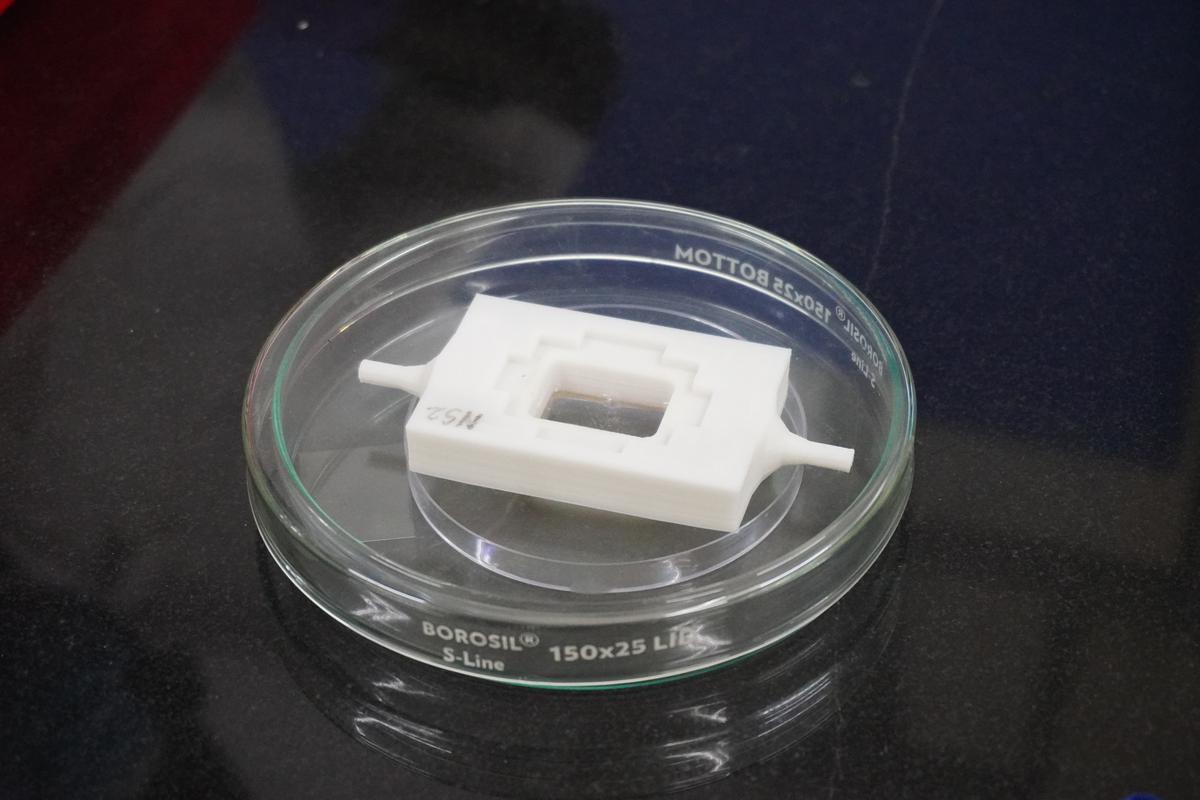
‘Organ on a chip’: a tech which mimics disease systems in laboratory conditions
- Last year, the U.S. government passed the Food and Drug Administration Modernization Act 2.0.
- The move is expected to boost the research and development of ‘organ chips’ — small devices containing human cells that are used to mimic the environment in human organs, including blood flow and breathing movements, serving as synthetic environments in which to test new drugs.
Introducing a new drug
- Bringing a new drug into the market is an expensive process ridden with failure.
- Researchers identify chemical compounds that can be used to treat a condition using modelling and other techniques.
- Then they shortlist those that perform well and test them on cells grown on plastic dishes in the lab or on animals that can mimic the disease in certain conditions.
- At this stage, called the preclinical trial, scientists determine whether these drugs are toxic and if they can efficaciously treat the condition.
- Animals used here include mice, rats, hamsters, and guinea pigs, depending on the drug being tested.
Current Scenario
- Today, fewer than 10% of new drugs complete preclinical studies and fewer than 50% of these eventually successfully complete clinical trials.
- The current consensus is that animals can mimic some human diseases well but not others.
- In cases where they can’t, a new drug that seems promising in preclinical studies is almost certainly bound to fail in human clinical trials.
- These challenges have led scientists to look for alternative models that mimic human diseases.
- One such is the organ-on-a-chip model, which has garnered a lot of attention in the last decade.
Organ chips
- Professor of bioengineering at Harvard University, and his colleagues developed the first human organ-on-a-chip model in 2010.
- It was a ‘lung on a chip’ that mimicked biochemical aspects of the lung and its breathing motions.
- In 2014, Wyss Institute members launched a startup called Emulate Inc. to commercialise their technology.
- The group has since created several different chips, including of the bone marrow, epithelial barrier, lung, gut, kidney, and vagina.
- Recently, Emulate’s liver chips could successfully predict the ability of drugs to cause liver injury with 87% sensitivity and 100% specificity.
- The researchers used liver chips to evaluate the toxic effects of 27 drugs known to be either safe or cause liver injury in humans.
Organ chips in India
- A few research groups in India have also been developing organ-on-chip models.
- A group has developed a skin-on-chip model.
- The model is currently being tested for studying skin irritation and toxicity. The two groups are also developing a retina-on-chip model together.
- The team is also separately developing a placenta-on-chip model.
- These models better predict treatment outcomes than conventional cell-culture systems, where researchers grow cells in plastic dishes in the lab, since they model different aspects of the human body, including its three-dimensional geometry and the flow of fluids like blood and lymph.
- Apart from organs, researchers are also trying to mimic different disease states using chips.
- The goal is to mimic an infection that doesn’t heal despite prolonged and repeated antibiotic treatment.
Ready to use?
- These organs-on-chips that Indian scientists have developed are ready for use as drug test-beds in lab settings, but they could be a decade away from featuring in preclinical trials, with a push.
- Researchers and biomedical companies in the West have started to build larger human-on-chip models — assemblies of different organ chips containing nutrients for the cells flowing across them, mimicking the flow of blood and nutrients across different organs in the body.